How to Save Tax on Investment Property in Australia

How to Save Tax on Investment Property in Australia (Complete 2026 Guide)
Owning an investment property in Australia can be a powerful way to build long-term wealth. However, many investors fail to take advantage of legitimate tax deductions and strategies that could significantly reduce their tax bill.
Understanding how to save tax on investment property in Australia is essential if you want to maximise your returns and remain compliant with the Australian Taxation Office (ATO).
With the right strategy, investors can legally reduce tax through:
- Rental property deductions
- Property depreciation claims
- Negative gearing benefits
- Capital gains tax (CGT) planning
This guide explains the ATO-approved ways property investors can legally minimise tax and maximise returns.
Quick Tax-Saving Checklist for Property Investors
Before diving into details, here are some key strategies every investor should follow:
✔ Declare all rental income correctly
✔ Claim every eligible deduction
✔ Obtain a professional depreciation schedule
✔ Understand how negative gearing works
✔ Plan capital gains tax before selling
✔ Maintain organised records for ATO compliance
Following these steps can significantly reduce your annual tax liability.
How Investment Property Tax Works in Australia
In Australia, rental income from an investment property is added to your total taxable income.
However, the good news is that expenses related to generating that rental income can be deducted, reducing your overall tax bill.
Basic Tax Structure
| Item | Tax Treatment |
|---|---|
| Rental Income | Included in taxable income |
| Property Expenses | Tax deductible |
| Depreciation | Can be claimed annually |
| Capital Gain | Tax applies when property is sold |
If your property expenses exceed your rental income, you may create a rental loss, which can be used to reduce other taxable income such as salary.
This is known as negative gearing.
Rental Income You Must Declare
The ATO requires property owners to report all income generated from rental properties, including:
- Weekly rent payments
- Short-term rental income (Airbnb, Stayz)
- Insurance payouts for loss of rent
- Tenant reimbursements for expenses
- Bond money retained for damages or unpaid rent
The ATO uses advanced data-matching systems with property managers and rental platforms, so accurate reporting is essential.
Common Investment Property Tax Deductions
Many investors miss deductions that could save thousands each year.
Below are some of the most common tax deductions for investment properties in Australia.
| Expense | Deductible | Notes |
|---|---|---|
| Loan Interest | Yes | Must relate to investment loan |
| Council Rates | Yes | Claim for rental period |
| Property Management Fees | Yes | Fully deductible |
| Insurance | Yes | Includes landlord insurance |
| Repairs | Sometimes | Must be genuine repairs |
| Depreciation | Yes | Requires depreciation schedule |
Claiming these expenses correctly helps reduce your taxable rental income.
Loan Interest and Borrowing Costs
Interest on loans used to purchase or improve rental property is usually the largest tax deduction for property investors.
Additional borrowing costs may also be deductible, including:
- Loan establishment fees
- Mortgage broker fees
- Lender’s Mortgage Insurance (LMI)
However, if you redraw funds from the loan for personal purposes, the interest on that portion cannot be claimed as a tax deduction.
Repairs vs Improvements: Understanding the Difference
The ATO distinguishes between repairs and capital improvements.
Repairs (Immediately Deductible)
Repairs restore the property to its original condition.
Examples:
- Fixing a broken fence
- Repairing plumbing
- Replacing damaged tiles
Improvements (Claimed Over Time)
Improvements increase the value or functionality of the property.
Examples:
- Renovating a kitchen
- Installing new flooring
- Building a deck
These expenses are treated as capital costs and claimed through depreciation or included in the property’s cost base.
Property Depreciation: A Powerful Tax Strategy
Depreciation allows investors to claim deductions for the wear and tear of a property over time.
There are two main types:
Capital Works (Division 43)
This applies to the building structure itself.
Eligible properties built after September 1987 can claim approximately 2.5% of construction costs per year for up to 40 years.
Plant and Equipment (Division 40)
This includes removable assets such as:
- Carpets
- Ovens
- Air conditioners
- Blinds
These assets depreciate faster and can create significant deductions.
Why a Depreciation Schedule Is Important
A depreciation schedule prepared by a qualified quantity surveyor identifies all depreciable assets in your property.
Benefits include:
✔ Maximising annual deductions
✔ Ensuring ATO compliance
✔ Increasing investment cash flow
Many investors discover $5,000 to $15,000 in deductions annually through a professional schedule.
Negative Gearing Explained
Negative gearing occurs when the costs of owning a rental property exceed the income it generates.
The loss can be used to reduce other taxable income such as salary.
Example
If your rental loss is $8,000 and your marginal tax rate is 37%, your tax reduction could be approximately $2,960.
However, negative gearing still involves cash flow losses, so investors should consider long-term capital growth.
Capital Gains Tax (CGT) When Selling Property
When an investment property is sold for a profit, the gain is subject to capital gains tax.
Your capital gain is calculated as:
Sale Price – Cost Base = Capital Gain
The cost base includes:
- Purchase price
- Legal fees
- Stamp duty
- Renovation costs
- Selling costs
Strategies to Reduce Capital Gains Tax
1. 50% CGT Discount
If you hold the property for more than 12 months, individuals and trusts can reduce the taxable capital gain by 50%.
2. Main Residence 6-Year Rule
If the property was once your primary residence, you may still claim the main residence exemption for up to six years after renting it out.
3. Strategic Timing
Selling during a lower income year may reduce the tax rate applied to the gain.
Land Tax on Investment Properties
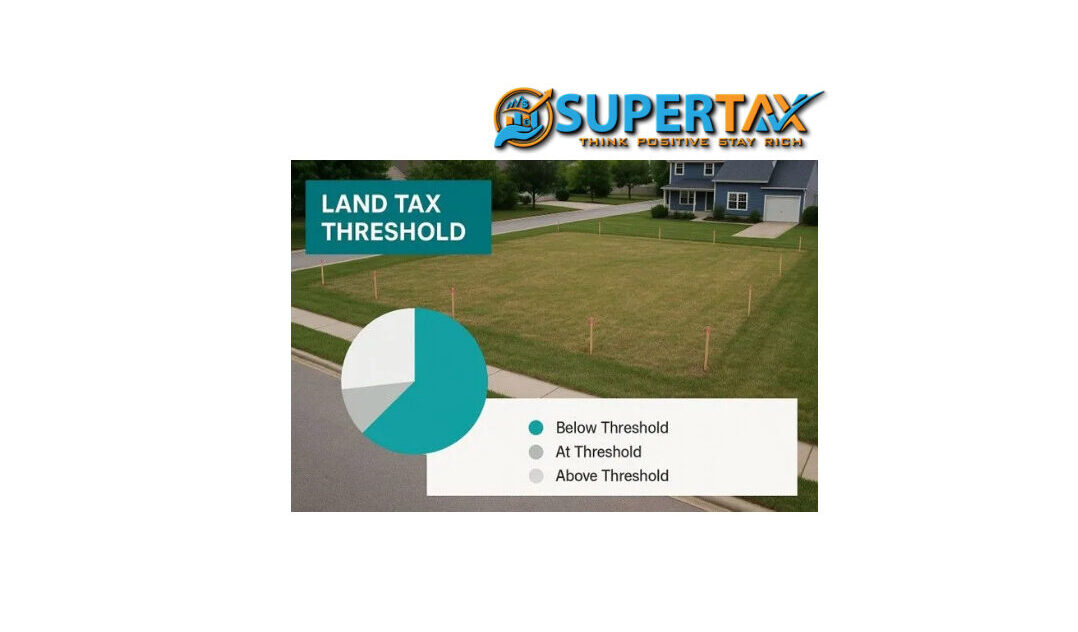
Land tax is a state-based tax, meaning the rules vary depending on where the property is located.
It applies to the unimproved land value, not the building.
Land tax is generally tax-deductible against rental income.
Investors should check thresholds and rates with their relevant state revenue office.
8-Step Tax Strategy for Property Investors
- Choose the correct ownership structure
- Maintain organised financial records
- Structure loans correctly
- Claim all running expenses
- Obtain a depreciation schedule
- Monitor negative gearing impact
- Plan CGT before selling
- Review your tax strategy annually
Regular reviews with a tax professional ensure maximum deductions and compliance.
Example: How Tax Savings Work
Assume the following scenario:
Annual Rental Income: $30,000
Expenses:
- Loan Interest: $20,000
- Rates: $2,000
- Agent Fees: $2,000
- Depreciation: $6,000
Total deductions equal $30,000, meaning the property is neutrally geared.
Without depreciation, the investor would pay tax on an additional $6,000 of income.
Common Mistakes Property Investors Make
Avoid these frequent tax mistakes:
❌ Claiming personal expenses as deductions
❌ Missing depreciation opportunities
❌ Incorrectly claiming travel expenses
❌ Poor record keeping
❌ Failing to plan CGT before selling
Keeping organised records and seeking professional advice can prevent costly errors.
Investment Property Tax Checklist
Before lodging your tax return, ensure:
✔ All rental income is recorded
✔ Receipts and invoices are saved
✔ Loan interest statements are obtained
✔ Repairs vs improvements are classified correctly
✔ Depreciation schedule is updated
✔ Land tax notices are recorded
✔ Capital improvements are tracked
FAQs
What expenses can I claim on an investment property?
Common deductions include loan interest, council rates, insurance, property management fees, repairs, and depreciation.
Can I claim depreciation on an older property?
Yes. Even older properties may contain depreciable assets from renovations completed by previous owners.
Is negative gearing still allowed in Australia?
Yes. Negative gearing remains a legitimate tax strategy for property investors.
Do I pay GST on residential rent?
No. Residential rent is input-taxed, meaning GST is not charged.
Final Thoughts
Investment property can provide excellent long-term returns, but the real financial benefits come from smart tax planning.
Maximising deductions, claiming depreciation, and planning capital gains tax correctly can significantly improve your investment outcomes while staying compliant with ATO regulations.
Need Expert Tax Advice for Your Investment Property?
At Supertax, our experienced tax professionals help property investors maximise deductions, stay compliant with ATO regulations, and develop long-term tax strategies.
Contact Supertax today to ensure you’re claiming every deduction you’re entitled to.
Other posts