Payday Super 2026: New Rules, Deadlines & Employer Compliance Guide

Payday Super 2026: New Rules, Deadlines & Employer Compliance Guide
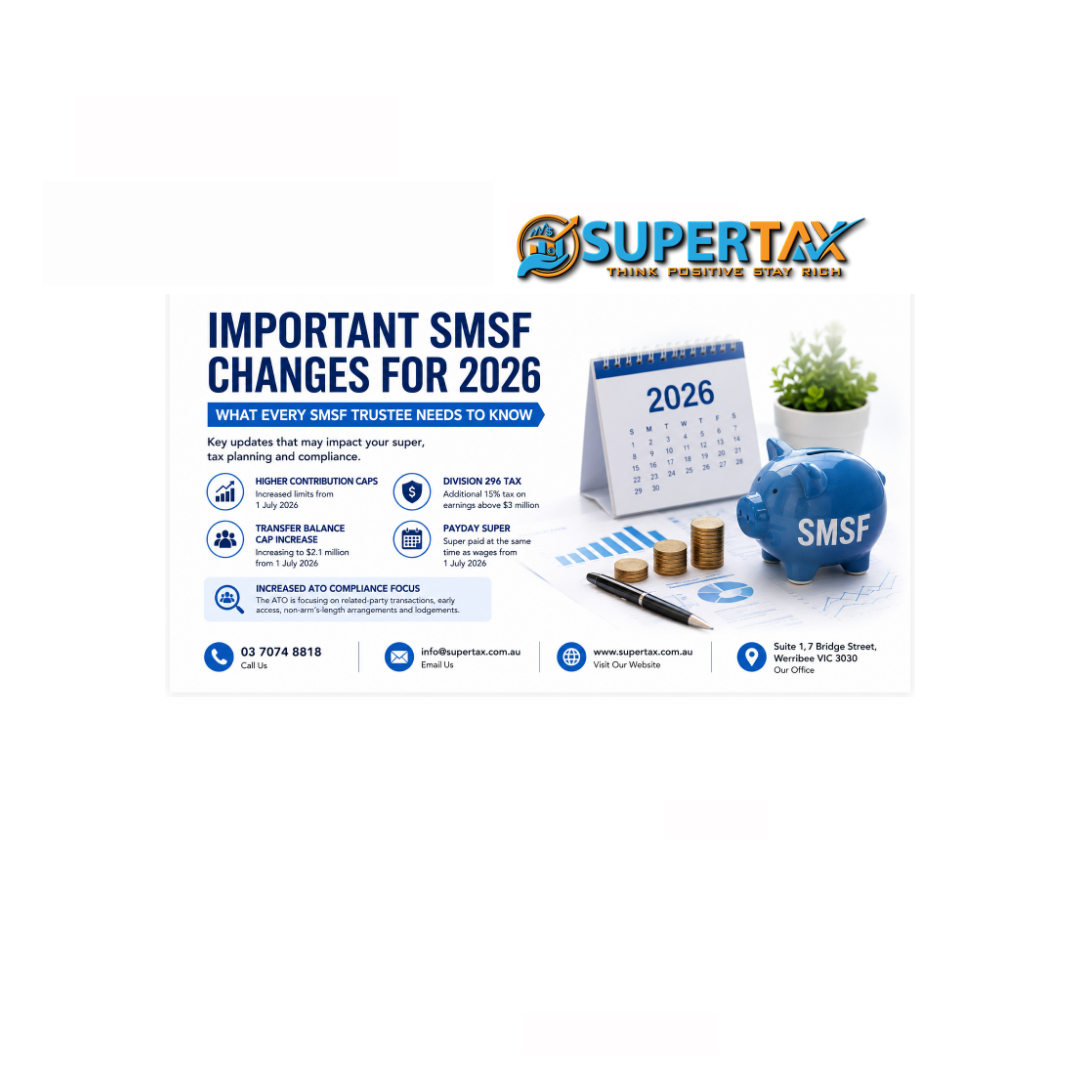
Payday Super is set to transform how Australian employers calculate, pay, and report superannuation. From 1 July 2026, new rules introduced by the Australian Taxation Office will require businesses to align super payments with employee pay cycles.
In this guide, Supertax explains what Payday Super means, why it’s being introduced, and how your business can stay compliant.
What is Payday Super?
Payday Super is a major reform that changes:
- How super guarantee (SG) is calculated
- When super contributions must be paid
- How super is reported
From 1 July 2026:
- Super must be paid on payday, at the same time as wages
- Contributions must be received by the employee’s super fund within 7 business days
- Super guarantee will be calculated as 12% of qualifying earnings (QE)
This introduces a more streamlined and real-time approach to super payments.
Why is Payday Super Being Introduced?
The reform aims to:
- Ensure employees receive their super sooner and more consistently
- Reduce late or unpaid super contributions
- Improve transparency through real-time reporting
- Strengthen compliance across the super system
- Minimise long-term super shortfalls
Employers can choose to adopt Payday Super before July 2026 to get ahead of compliance changes.
What’s Changing from 1 July 2026?
1. New Super Payment Deadlines
Employers must:
- Pay super at the same time as wages (on payday)
- Ensure funds are received by the super fund within 7 business days
What this means for employer:
With the addition of same-day super, you will need to allow extra admin time when processing payroll to ensure clearing houses receive funds promptly and avoid fees.
- Make budget changes now to reflect the payday super knock-on effect on your cashflow. Learn how to update super in your Agrimaster Full Budget.
- Amend superannuation payments from quarterly to monthly from July 2026.
- Review how this affects your cashflow and, in particular, your low-income months.
💡 Supertax Tip: Start reviewing your payroll systems now to avoid last-minute disruptions.
2. Changes to Super Guarantee Calculations
Super will be calculated as:
- 12% of qualifying earnings (QE)
QE includes:
- Ordinary Time Earnings (OTE)
- Salary sacrifice contributions
- Additional payments included in wages for SG purposes
This may increase the total super payable for some employees.
3. Real-Time Reporting via STP
Employers will need to report:
- Qualifying earnings
- Super liability
Through Single Touch Payroll (STP), increasing reporting frequency and accuracy.
4. Stricter Penalties for Late Payments
If the super payment to the clearing house is not received within 7 business days of payday, the ATO can enforce strict penalties.
- The Super Guarantee Charge (SGC) will apply
- Additional penalties of 25% to 50% may be imposed depending on compliance history
Timely payments will be critical under the new system.
5. Small Business Superannuation Clearing House (SBSCH)
The ATO’s SBSCH will no longer be available.
All employers must transition to an alternative SuperStream-compliant clearing house.
Speak to your accountant to determine the clearing house option that best suits you and your business.
Before transitioning, confirm that your chosen clearing house:
- Supports per-pay-run submissions
- Meets the 7-business-day processing requirement
- Provides clear reporting and error notifications
How to Prepare for Payday Super
To stay compliant, Supertax recommends:
- Updating payroll systems for per-pay-cycle super payments
- Reviewing cash flow impacts, especially during low-income periods
- Transitioning from quarterly to more frequent super payments
- Confirming your clearing house is SuperStream compliant
- Training staff on new reporting and compliance requirements
Final Thoughts
Payday Super represents one of the most significant changes to Australia’s superannuation system in recent years. While it increases administrative responsibility, it also creates a more transparent and reliable system for employees.
Preparing early will help your business avoid penalties and ensure a smooth transition.
👉 Get expert support and peace of mind today.
📍 Suite 1, 7 Bridge St, Werribee Victoria 3030, Australia
📞 (03) 7074 8818
📧 info@supertax.com.au
🌐 https://supertax.com.au/
Disclaimer
The information provided in this article is for general informational purposes only and does not constitute financial, taxation, or legal advice. Supertax is not licensed to provide financial product advice.
Before making any decisions regarding superannuation contributions or compliance, you should consider your individual circumstances and seek advice from a qualified and licensed professional.
Superannuation laws are complex and subject to change. While every effort has been made to ensure accuracy, Supertax does not guarantee the completeness or reliability of the information provided
Other posts