Land Tax Australia 2026: State Thresholds Explained for Property Investors
Land Tax Australia 2026: State Thresholds Explained for Property Investors
Many Australian property investors are surprised when they receive their first land tax bill. Unlike stamp duty or council rates, land tax is an annual state-based tax applied to the unimproved value of land once it exceeds the state’s land tax threshold.
Understanding the land tax threshold in Australia is essential for property investors, landlords, and developers. Knowing when land tax applies can help you plan investments, structure property ownership, and avoid unexpected tax liabilities.
Key Takeaways
- Land tax is charged annually by state and territory governments on land value.
- Your principal place of residence (PPR) is usually exempt from land tax.
- Each state has different land tax thresholds and rates.
- The unimproved value of land determines land tax, not the property market value.
- If the combined land value of your investment properties exceeds the threshold, land tax becomes payable.
What Is Land Tax in Australia?
Land tax is an annual state government tax based on the unimproved value of land you own.
It is important not to confuse land tax with other property charges such as:
- Council rates
- Stamp duty
- Property transfer duty
Land tax generally applies to investment properties, vacant land, commercial property, or secondary homes. The tax is triggered when the total land value exceeds the land tax threshold set by the state government.
For investors holding multiple properties, understanding how land tax works is critical to managing property holding costs.
What Is the Land Tax Threshold?
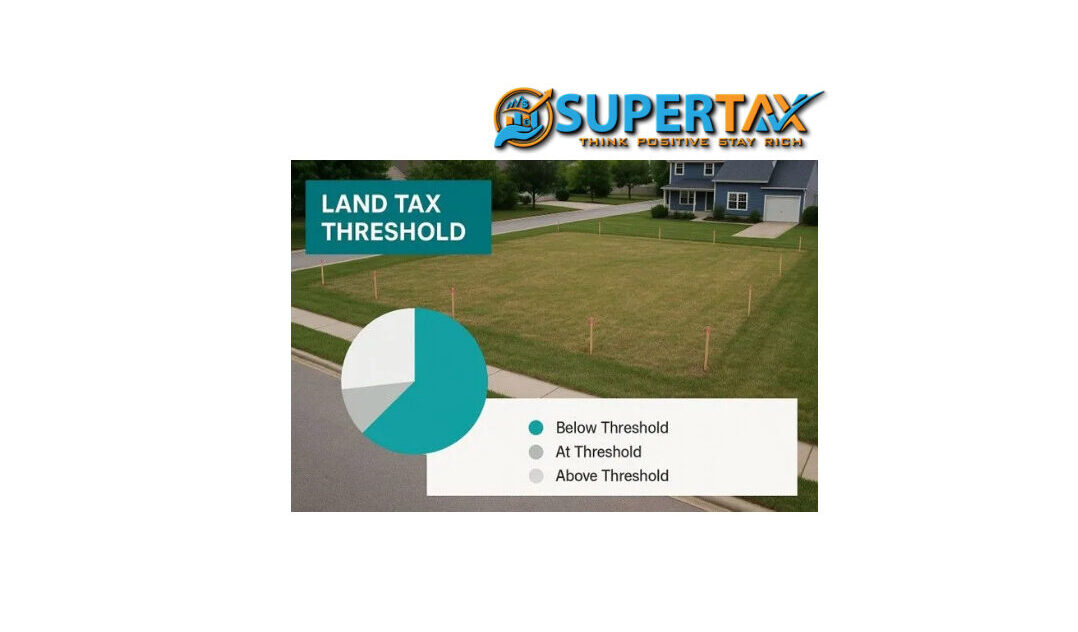
The land tax threshold is the minimum land value before land tax becomes payable.
You can think of it similar to the tax-free threshold for income tax. If the value of your taxable land remains below the threshold, no land tax applies.
However, once the combined land value exceeds the threshold, tax is charged on the value above the threshold.
Each state determines its own:
- Land tax threshold
- Land tax rates
- Exemptions
- Assessment rules
This is why land tax planning is an important part of Australian property investment strategy.
Land Tax Thresholds by State (Example)
Land tax rules differ across Australia. The thresholds below provide general examples, but investors should always confirm current figures with the relevant state revenue office.
| State | Example Land Tax Threshold | Authority |
|---|---|---|
| NSW | Threshold applies to total taxable land value | Revenue NSW |
| Victoria | Lower threshold compared to most states | State Revenue Office Victoria |
| Queensland | Different thresholds for individuals and companies | Queensland Revenue Office |
Because thresholds are reviewed annually, property investors should monitor changes each financial year.
NSW Land Tax Threshold
In New South Wales, the government froze the annual indexation of land tax thresholds.
Example thresholds:
- General threshold: $1,075,000
- Premium threshold: $6,571,000
Land tax is calculated on the combined land value of all taxable properties owned within NSW.
Victoria Land Tax Threshold
Victoria has one of the lowest land tax entry points in Australia.
Example:
- General threshold: $300,000
This means investors may become liable for land tax sooner compared to other states.
Victoria also applies additional surcharges for trusts, companies, and absentee owners, which can significantly increase tax obligations.
Queensland Land Tax Threshold
Queensland uses different thresholds depending on ownership type.
Example for individuals:
- $600,000 threshold
The Queensland Revenue Office assesses land tax based on the total value of freehold land owned in the state at midnight on 30 June each year.
Companies and trustees usually face different thresholds and higher rates.
Other States and Territories
Other Australian states also impose land tax with their own thresholds and rules, including:
- South Australia
- Western Australia
- Australian Capital Territory
The Northern Territory currently does not charge land tax, making it unique among Australian jurisdictions.
Which Properties Are Exempt from Land Tax?
Certain properties qualify for land tax exemptions.
The most important exemption is the Principal Place of Residence (PPR).
This means the home you live in is usually not subject to land tax.
However, eligibility depends on meeting specific conditions, such as:
- Living in the property continuously
- Using the property primarily as your residence
Using part of your home for business or renting it out may affect this exemption.
Other common exemptions include:
- Primary production land (farms)
- Charitable institution property
- Retirement villages
- Aged care facilities
Incorrectly claiming an exemption can lead to penalties or backdated land tax assessments.
How Land Tax Is Calculated
Land tax calculations rely on two main factors:
1. Unimproved Land Value
This is the value of the land itself, excluding buildings or improvements.
State valuation authorities assess this value annually.
2. Aggregation
All taxable land owned within a single state is combined together.
If the aggregated land value exceeds the threshold, land tax is applied to the amount above that threshold.
How to Check If You Owe Land Tax
Property investors can follow these steps to estimate potential land tax liability.
Step 1
Find the unimproved land value on your state valuation notice.
Step 2
Identify the state where the property is located.
Step 3
Check the current land tax threshold for that state.
Step 4
Add the land value of all investment properties you own in that state.
Step 5
Compare the total with the threshold.
Step 6
If the value exceeds the threshold, estimate the land tax payable on the excess amount.
Ownership structure such as individual, company, or trust can significantly affect the result.
Example: Land Tax for an Investment Property
Consider a property investor who owns two rental properties in Sydney.
Property land values:
- Property 1 land value: $750,000
- Property 2 land value: $500,000
Total land value:
$750,000 + $500,000 = $1,250,000
If the NSW threshold is $1,075,000, the investor exceeds the threshold and becomes liable for land tax.
The tax will apply only to the amount above the threshold.
Land Tax Planning Checklist for Property Investors
To avoid unexpected tax bills, property investors should review land tax annually.
✔ Confirm land value using official state valuation
✔ Check current land tax thresholds
✔ Aggregate land value of all investment properties
✔ Confirm principal residence exemption eligibility
✔ Estimate potential land tax payable
✔ Review ownership structure for tax efficiency
Proper planning can help reduce unnecessary land tax liabilities.
Common Land Tax Mistakes
Confusing land tax with property value
Land tax is based on land value only, not the property’s market price.
Forgetting aggregation rules
Owning multiple properties in the same state can push you above the threshold.
Ignoring ownership structure
Companies and trusts often face different thresholds or higher rates.
Not claiming exemptions
Failing to claim the principal residence exemption may result in paying unnecessary land tax.
FAQs About Land Tax in Australia
What is the land tax threshold in Australia?
The land tax threshold is the minimum land value before land tax becomes payable .Each Australian state sets its own threshold.
Do you pay land tax on your home?
No. Your principal place of residence is usually exempt from land tax.
How is land value calculated?
The Valuer-General determines the unimproved land value each year.
Do multiple properties affect land tax?
Yes. The combined land value of all properties in the same state is aggregated.
Do trusts pay land tax differently?
Yes. Trusts and companies often face different thresholds and higher tax rates.
Can land tax be tax deductible?
Yes. Land tax paid on investment properties generating rental income is generally tax deductible.
Final Tips for Managing Land Tax
Understanding land tax thresholds in Australia is essential for property investors. Without proper planning, land tax can significantly reduce rental profits.
Investors should:
- Review land values annually
- Track changes in state thresholds
- Consider ownership structures carefully
- Factor land tax into investment decisions
Professional tax advice can help ensure your property portfolio remains tax-efficient and profitable.
Need Help With Property Tax or Land Tax Planning?
Supertax provides expert advice on Australian property tax, land tax planning, and investment structures.
Contact our team today to ensure your property investments remain compliant and tax-efficient.
👉 Get expert support and peace of mind today.
📍 Suite 1, 7 Bridge St, Werribee Victoria 3030, Australia
📞 (03) 7074 8818
📧 info@supertax.com.au
🌐 https://supertax.com.au/
Other posts